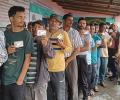
The Election Commission has assured the Supreme Court that no voter's name will be deleted from the draft electoral roll in Bihar without prior notice and a fair hearing. The EC also clarified that it is not required to share separate lists of those not included in the draft rolls.
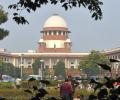
The Supreme Court has scheduled hearings starting August 19 for the Presidential Reference concerning constitutional issues related to timelines for handling bills passed by state assemblies. The court has directed the Centre and states to submit written arguments by August 12.

The Supreme Court of India on Tuesday questioned the issue of using "spyware against terrorists" and stated that any report touching upon the country's "security and sovereignty" won't be made public. The court indicated it might address individual concerns regarding privacy breaches, but the report of the technical committee would not be a document for public discussion. The court will examine the extent to which the report can be shared publicly. The court's statement came during a hearing on a petition related to the alleged use of Pegasus spyware for surveillance. The court also emphasized that "having spyware is not wrong, against whom you are using is the question" and that the security of the nation cannot be compromised. The hearing has been adjourned to July 30.
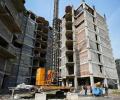
Observing an "unholy nexus" between the banks and developers to dupe homebuyers, the Supreme Court on Tuesday directed the CBI to register seven preliminary enquiries against builders in NCR, including Supertech Limited.

The apex court had decided to hear the pleas related to the IOA and the AIFF together.
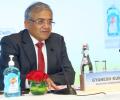
Congress general secretary K C Venugopal said in a hasty midnight move, the government has notified the appointment of the new CEC.
The top court said an accused has a right to voluntarily undergo a narco-analysis test at an appropriate stage.

The Supreme Court has ordered authorities not to take coercive action against owners of diesel vehicles over 10 years old and petrol vehicles older than 15 years in Delhi-NCR.
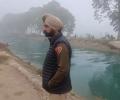
The Supreme Court of India has directed the governments of Punjab and Haryana to cooperate with the Centre in finding an amicable solution to the long-standing dispute over the Sutlej-Yamuna Link (SYL) canal. The court deemed the de-notification of land acquired for the canal in Punjab an "act of high-handedness" and emphasized the need to consider "wider ramifications" beyond legal considerations. The court has set August 13 for a further hearing if an amicable solution is not reached.
The CBI has filed a case against six Jammu and Kashmir police officials for allegedly torturing a fellow constable in custody. The case was registered following a Supreme Court order.
The Supreme Court on Tuesday took exception to the Allahabad high court's recent remarks in a rape case as reportedly saying the complainant "herself invited trouble", and wondered why it made such observations while deciding a bail plea.

Several petitions were filed in the apex court challenging the Act, contending that it was discriminatory towards the Muslim community and violated their fundamental rights.

The Supreme Court has expressed concern over the increasing pollution levels during winter and has suggested that the Punjab government arrest farmers who engage in stubble burning. The court believes that this action would send a strong message and help curb air pollution.

A group of retired judges has criticized Home Minister Amit Shah's remarks about opposition vice-presidential candidate B Sudershan Reddy and the Salwa Judum judgement, calling them 'unfortunate'.
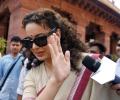
The Supreme Court told actor and BJP MP Kangana Ranaut that she had "added spice" to a retweet during the 2020-21 farmers' protest, leading her to withdraw her plea for quashing a defamation complaint.

The Supreme Court of India has ruled that secretly recorded conversations between spouses are admissible as evidence in matrimonial cases, arguing that such snooping indicates a breakdown of trust and a troubled marriage.

A bench of Justices Ujjal Bhuyan and Manmohan asked the Madras high court chief justice to transfer the cases involving the ADGP to another bench as it set aside the directive of the high court asking the police to take Jayaram into custody.

The Supreme Court of India has ruled that Tamil Nadu Governor R.N. Ravi can no longer serve as chancellor of state-run universities, a decision welcomed by the ruling DMK party. The court's judgment stems from a long-standing dispute between the state government and the governor over the assent of 10 bills passed by the Tamil Nadu Assembly. The DMK alleges that the governor had obstructed the smooth functioning of universities by delaying appointments and other critical matters. The judgment paves the way for the Tamil Nadu government to appoint new chancellors for its universities, effectively removing the governor's influence in higher education.
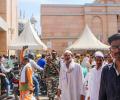
The Act prohibits conversion of any place of worship and provides for the maintenance of the religious character of any place of worship as it existed on August 15, 1947.
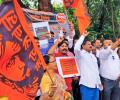
The Bombay high court on Friday constituted a three-judge special bench to hear the pleas challenging the constitutional validity of the law providing Maratha reservation following a Supreme Court directive.

The Supreme Court will also hear similar pleas related to permanent commission from the Indian Navy, followed by the Indian Air Force and Coast Guard.
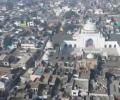
A court in Budaun will decide on December 24 whether to proceed with a hearing in the Jama Masjid Shamsi versus Neelkanth temple case. The dispute arose in 2022 when a Hindu group claimed the temple existed at the mosque site and sought permission to worship. The Supreme Court recently restrained all courts from entertaining and passing any orders on lawsuits seeking surveys of religious places under the Places of Worship (Special Provisions) Act, 1991. The Muslim side argues that the lower court should not proceed with the hearing as it cannot pass any orders, while the Hindu side maintains the Supreme Court order does not stop the hearing. The court will now decide whether to continue the proceedings.

The Supreme Court has permitted the sale and bursting of green crackers in Delhi-NCR for Diwali, relaxing the ban on green firecrackers as a temporary measure from October 18 to 21. The court has asked pollution control boards to monitor pollution levels and file reports. The order also includes measures to prevent the sale of non-compliant crackers.
The accused, in charge of a school and a hostel, had scolded the deceased following a complaint by another student. After the incident, the student hanged himself in a room.
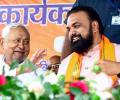
Jan Suraaj Party founder Prashant Kishor alleges Bihar Deputy Chief Minister Samrat Choudhary escaped a murder trial by falsely claiming to be a minor. He demands Choudhary's dismissal and threatens to expose further financial irregularities.

The Supreme Court on Friday modified its August 11 direction prohibiting release of stray dogs from pounds in Delhi-NCR and said the picked up canines should be sterilised, vaccinated and released back in the same area.
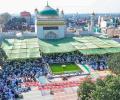
The law prohibits conversion of any place of worship and provides for the maintenance of the religious character of any place of worship as it existed on August 15, 1947.

In a significant order, the Supreme Court on Friday issued directions that the post-graduate medical entrance exam scheduled on June 15 be conducted in a single shift, saying holding it in two shifts 'creates arbitrariness'.
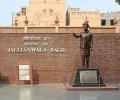
Former Supreme Court judge Justice Rohinton Nariman has warned that events similar to the Jallianwala Bagh massacre could occur if the 'basic structure' doctrine of the Constitution is diluted. In his new book, 'The Basic Structure Doctrine: Protector of Constitutional Integrity,' Nariman argues that the 1973 Kesavananda Bharati judgment, which established the doctrine, is essential for protecting fundamental rights and preventing constitutional amendments that could lead to such tragedies. Nariman's concerns are echoed by Supreme Court judge Justice K V Viswanathan, who applauds the book for its "chilling clarity" and underscores the importance of the Kesavananda Bharati ruling. The book provides a detailed analysis of the doctrine and its implications, highlighting the robustness of the Kesavananda Bharati judgment and the lack of a compelling alternative theory.

Observing that persons regardless of popularity are equal before the law, the Supreme Court on Thursday cancelled the bail granted to actor Darshan and other accused in the Renukaswamy murder case.
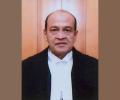
Officials aware of the procedure to appoint and remove Supreme Court and high court judges pointed out that while defending his case before lawmakers in any of the House, Justice Varma can announce that he is quitting and his verbal statement will be considered as his resignation.
A bench comprising Chief Justice B R Gavai and Justices Augustine George Masih and AS Chandurkar also directed that the offending video be immediately taken down and restrained the YouTube channel from republishing it or similar content.

A Supreme Court order relocating an elephant to a care facility in Vantara has sparked public outrage in Maharashtra by putting the state government in a difficult position over issues of animal welfare and public sentiment.

The Supreme Court has sought responses from the Centre and Union Territory of Ladakh regarding the detention of climate activist Sonam Wangchuk under the National Security Act. Wangchuk's wife filed a plea seeking his release. The court has scheduled the next hearing for October 14.

President Droupadi Murmu has exercised powers under Article 143(1) used in rarity to know from the Supreme Court whether timelines could be imposed by judicial orders for exercise of discretion by President while dealing with the bills passed by state assemblies.

The Supreme Court is scheduled to deliver on Friday its verdict on Delhi Chief Minister Arvind Kejriwal's petitions seeking bail and challenging his arrest by the Central Bureau of Investigation (CBI) in the excise policy 'scam'.
The Supreme Court on Wednesday refused to hear a plea seeking a first information report (FIR) against high court judge Yashwant Varma in connection with the discovery of cash from this official residence in the capital.

Former Chief Justice of India D Y Chandrachud addresses the controversy surrounding his continued stay at his official residence after retirement, citing his daughters' medical needs and ongoing efforts to move to suitable accommodation.

A lawyer allegedly attempted to throw a shoe at Chief Justice of India BR Gavai during court proceedings. Security intervened, and the lawyer was removed from the premises. The CJI remained composed and continued with the proceedings.

'Government cannot pick and choose as to against whom they want to take action and against whom they do not want to take action.'
